67.8K
Downloads
447
Episodes
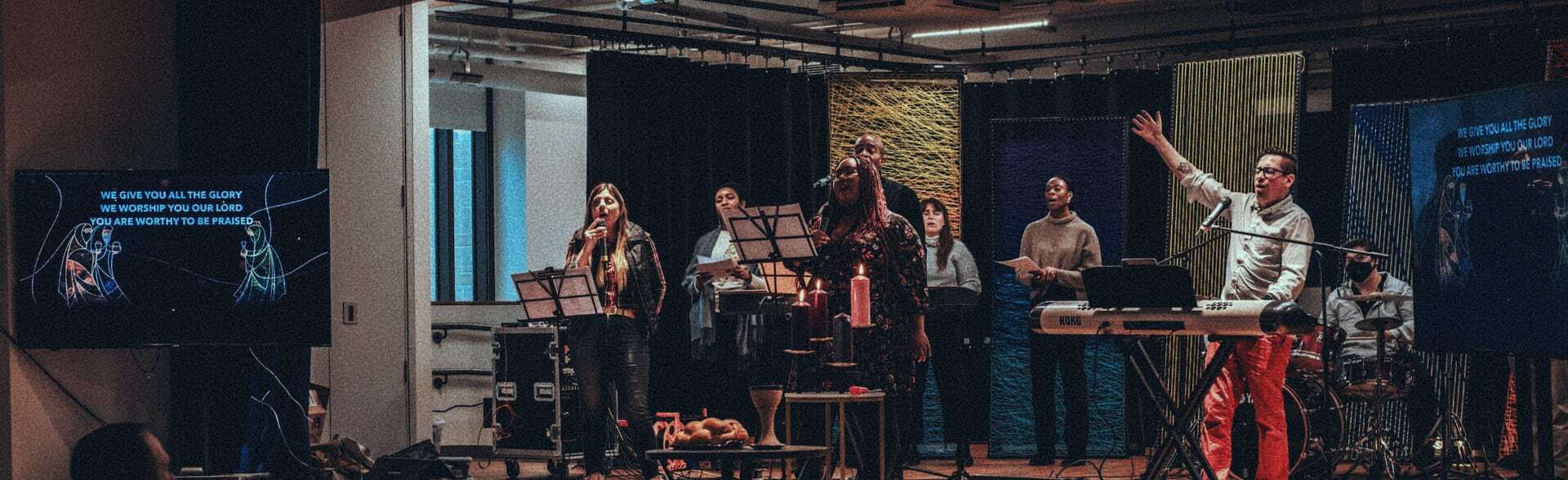
The Table Church’s vision is embody a more beautiful gospel that announces collective liberation and the renewal of all things. We are a multiracial, LGBTQ affirming church in Washington, DC.
Episodes
Monday Dec 22, 2025
Monday Dec 22, 2025
What does biblical manhood actually look like? Spoiler: it's not what you've been told. This sermon explores the story of Joseph—a carpenter who had every reason to walk away from Mary's inexplicable pregnancy but chose something more difficult: solidarity, humility, and embracing mystery over control.
Pastor Tonetta draws from the metaphor of a Korean spa scrub to explore what we need to shed during Advent: patriarchy disguised as righteousness, charity that keeps us comfortable instead of solidarity that costs us something, and the false hope of optimism that crumbles when things go sideways. Joseph's power wasn't in control—it was in his subversive tenderness and willingness to not be the main character.
If you're exhausted by shallow positivity and wondering what real hope looks like when the world feels dark, this is for you. Includes questions to sit with whether you hold privilege or need to ask for more support.
Tuesday Dec 16, 2025
Tuesday Dec 16, 2025
Not all fear is the same. Some fear protects you from real danger—and if you've experienced religious trauma or spiritual abuse, those fears are legitimate. But other fear is trickier: it's the voice telling you you're not capable, not worthy, that you can't trust yourself. This sermon explores how to tell the difference between protective fear and the fear of inadequacy that keeps you small.
Drawing on the stories of Mary and Jeremiah—both of whom faced genuine, life-threatening risks—Antonio offers a framework that doesn't gaslight you about danger but also doesn't let fear of your own potential win. The goal isn't moving forward fearlessly, but faithfully. Baby steps count. And yes, you can say yes while still trembling.
Friday Dec 12, 2025
Friday Dec 12, 2025
What do you do when giving up feels simpler than keeping going? When even the people you admire most are questioning whether any of this matters? This sermon explores why despair can feel like a guilty pleasure—offering a horrifying kind of consistency in chaotic times—and why that simplicity is ultimately a lie.
Drawing on the story of John the Baptist questioning Jesus from prison, this message wrestles with what hope looks like when you're running on empty. The answer isn't about manufacturing optimism or pretending things are fine. It's about learning to see the quiet, unspectacular work of repair that's already happening around you—the food pantries, the phone calls, the people showing up exhausted but still showing up.
You don't have to see the finish line to run the race. Your small, faithful acts of repair matter even if you never see them bloom. This week, do one thing without needing to know if it will work.
Wednesday Dec 03, 2025
Wednesday Dec 03, 2025
What do you do when you've buried your hopes because holding onto them hurt too much? When the world feels so dark that giving up seems like the only way to survive the next day? This Advent sermon explores an uncomfortable truth: hope isn't always comforting—sometimes it's terrifying.
Drawing from an ancient poet writing amid literal apocalypse and a couple who'd long given up on their dream, this message wrestles with two competing realities. Sometimes our circumstances don't change the way we want, but hope can still emerge in unexpected ways. Other times, hope breaks through demanding we seize it—but fear keeps us from reaching out.
Whether you're facing political despair, personal disappointments, or just trying to figure out how to keep going, this sermon offers a framework for distinguishing between what we can change and what we can't—and why showing up matters either way.
Monday Nov 24, 2025
Monday Nov 24, 2025
What if the book of Revelation isn't about escaping the world, but about resisting it? Drawing from visits to the 16th Street Baptist Church bombing site and a memorial to lynching victims, this sermon reframes Revelation's final vision as a manual for living under empire—any empire that crushes human flourishing.
The ancient text offers more than comfort for the afterlife. It presents a choice: whose reality will you live inside? The sermon traces how even kings who warred against God appear at the gates of the New Jerusalem, suggesting something provocative about reconciliation, boundaries, and the possibility of transformation. You'll encounter the phrase "making all things new, not making all new things" and consider what it means to practice hope when hopelessness feels easier.
Discover why Revelation might be less about predicting the future and more about performing resistance in the present.
Wednesday Nov 19, 2025
Wednesday Nov 19, 2025
For centuries, Western Christianity has taught that hell means eternal conscious torment—but what if that's based on a mistranslation? This sermon digs into the Greek text of Revelation 20, the "millennium debate," and why early church theologians read the "lake of fire" as refining transformation rather than endless punishment.
Drawing on scholarship about the word aion (age, not eternity) and the character of a God whose "mercy endures forever," this message offers a different framework: one where death itself dies, where the fire is surgical rather than sadistic, and where justice work—though painful—becomes participation in resurrection.
Especially relevant for anyone processing church hurt, questioning traditional theology, or wondering what it means to work for justice when systems feel immovable. Also includes honest reflection on loss, community endings, and what happens when good things die.
Monday Nov 10, 2025
Monday Nov 10, 2025
We've been told Revelation is about predicting the future or achieving the right political outcomes. But what if it's actually about something we can't control or engineer ourselves? This sermon explores how the Bible's most misunderstood book challenges both religious conservatives and progressive activists to reconsider what liberation actually means.
Drawing on imagery of empire's collapse and unexpected visions of hope, this talk argues that treating faith as either a political platform or an intellectual puzzle drains our capacity to act. Instead, Revelation calls us to something bigger: receiving what we cannot explain, resisting what we cannot ignore, and enduring when logic fails.
If you've ever felt exhausted by trying to figure everything out or felt your doubts piling up despite all the books you've read, this perspective on salvation as "spaciousness" rather than certainty might reframe everything.
Tuesday Nov 04, 2025
Tuesday Nov 04, 2025
What do you do with biblical texts that depict God pouring out bowls of cosmic destruction? For those of us who believe in a nonviolent, loving God, passages like Revelation 15-16 create serious problems. They've been used to terrorize people and justify violence for centuries.
This sermon offers a different way forward. By understanding apocalyptic literature as symbolic resistance writing from the powerless, and by reading through three theological frameworks—universalism, pacifism, and open theology—we discover something surprising: even here, the text itself points toward universal reconciliation rather than eternal punishment. The sermon explores how God's wrath might be less about cosmic revenge and more about love fiercely opposing what harms creation.
If you've ever struggled with violent biblical imagery, wondered how justice and mercy fit together, or wanted to resist oppressive systems while still holding onto hope, this conversation is for you. Includes a bonus Andor reference about resisting empire.