80.4K
Downloads
478
Episodes
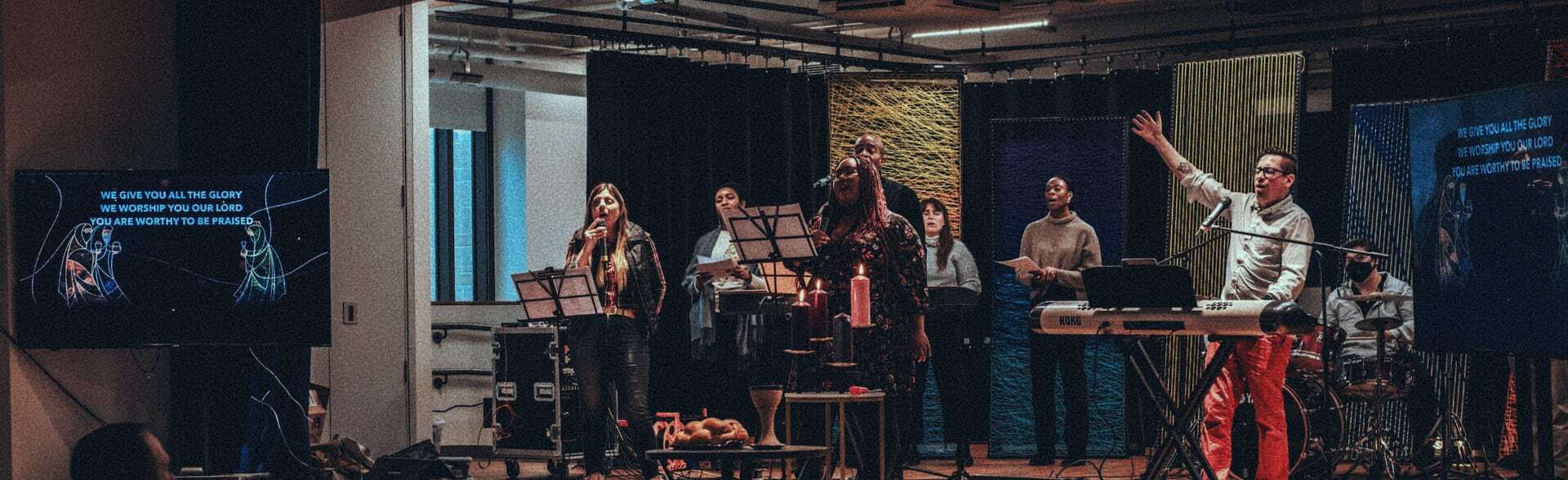
The Table Church’s vision is embody a more beautiful gospel that announces collective liberation and the renewal of all things. We are a multiracial, LGBTQ affirming church in Washington, DC.
Episodes
Feb 18, 2026
Feb 18, 2026
34 min
Many of us carry complicated feelings about prayer — maybe it was weaponized against us, maybe it felt hollow, or maybe we prayed hard for something and got silence in return. This episode sits with that tension honestly, without rushing past it.
Antonio Ingram explores what prayer actually looks like when you stop performing and start showing up as you are — scared, angry, lonely, in pain. Drawing from the prophet Jeremiah, he makes the case that raw, unfiltered honesty isn't a barrier to connecting with God — it's the door.
Whether you've been avoiding prayer for years or you're just exhausted by the version of it you inherited, this one is worth your time. Cast your nets one more time.
Feb 11, 2026
Feb 11, 2026
31 min
You've been showing up, doing the work, trying to live with integrity—and the results aren't there. Policies get worse. People leave. Relationships fracture. So you're left with a brutal question: Is any of this actually worth it?
This sermon explores the prophet Jeremiah, who preached justice for 23 years and saw zero measurable success. Through his story and the words of Martin Luther King Jr., we examine what happens when we stop measuring our faithfulness by outcomes and start asking a different question: What if the rightness of something doesn't depend on whether it's winning? What would it mean to commit to a long obedience in the same direction—not because the KPIs look good, but because the work itself is true?
For anyone exhausted by activism, burned out on hope, or wondering if they should just give up—this is about finding a way to keep going that doesn't rely on immediate success. It's about planting seeds underground where nobody's watching, trusting what you cannot yet see.
Feb 2, 2026
Feb 2, 2026
29 min
When the ground beneath our feet feels unstable, how do we stay true to ourselves while adapting to a world that keeps shifting? Many of us know what it's like to recognize that the practices that once grounded us no longer feel sufficient—or worse, they deliver us back into shame and uncertainty.
This sermon explores an obscure biblical community called the Rechabites, who mastered what we desperately need today: staying rooted in core values while improvising new responses to new challenges. Using insights from Martin Luther King Jr. and contemporary writer Kaveh Akbar, we examine why it's not enough to simply avoid doing harm—and what it actually looks like to move from endless abstinence to actively showing up for ourselves, our neighbors, and the world.
If you're exhausted from trying to do everything right while still wondering if you're making any real difference, this conversation offers a different framework: what if falling back in love with what matters most is actually the key to sustainable change?
Jan 28, 2026
Jan 28, 2026
33 min
Does the future feel inevitable to you? With authoritarianism, deportations, and relentless bad news, it's easy to believe everything is already decided—that we're just watching a slow collapse. Despair can start to feel rational, even responsible. But here's the problem: when we decide the future is sealed, we're actually letting ourselves off the hook. If nothing matters, why bother?
This talk explores an ancient text about a potter and clay that offers a radically different perspective: the future isn't fixed. It responds to what we do. Drawing on voices from James Baldwin to Fannie Lou Hamer, the sermon makes the case that your spiritual life isn't separate from your activism—prayer is part of the work, not what you do after the "real" work is done.
Whether you're carrying personal regrets or political despair, this message insists: the wheel is still spinning. Your past isn't your destiny, and neither is your nation's.
Jan 23, 2026
Jan 23, 2026
29 min
What happens when the promises of progress turn into frustration? When the institutions we've trusted prove unfaithful? Drawing on MLK's lesser-known "three evils" speech and the ancient prophet Jeremiah, this sermon explores what it means to be faithful when everything you've taken for granted is crumbling. It's about surviving Saturday—that disorienting space between disaster and restoration.
The core message is simple but uncomfortable: we've mistaken proximity for participation. We say "I go to church" the same way people once chanted "this is the temple of the Lord"—as if showing up could substitute for the harder work of actually listening and changing. Jeremiah's indictment was clear: the people had done everything except the one thing that mattered. They performed religion while ignoring its substance.
The invitation is to become "creatively maladjusted" in a world where deceptive words are everywhere. To stop being passive recipients and start actively making meaning. To ask yourself: where, when, and how will you actually listen?
Jan 14, 2026
Jan 14, 2026
26 min
Most of us feel like we missed the day in fourth grade when everyone else learned how to be enough. We know how to deconstruct harmful beliefs, but we've forgotten how to reconstruct something that can hold us. We're experts at spotting manipulation but have lost the ability to be moved. And when the foundations we took for granted—whether theological, political, or personal—start crumbling, it's easier to stay stuck than to show up.
This sermon introduces a series on the prophet Jeremiah, who lived faithfully through his nation's collapse and exile. His calling reveals something crucial: God doesn't choose people because they're qualified. The first lesson from Jeremiah? Stop pleading inadequacy. Whatever feels impossible right now—showing up in fraught political times, rebuilding a faith that can hold you, answering that call you can't shake—you already have what you need.
Using the metaphor of Friday (death), Saturday (devastating in-between), and Sunday (resurrection), this message offers practical wisdom for surviving the long Saturdays of our lives. Because as it turns out, "I am" is a complete sentence.
Jan 9, 2026
Jan 9, 2026
32 min
Fear has a way of convincing us that silence and compliance will keep us safe—but what happens when staying quiet means cooperating with harm? This sermon explores how fear gets weaponized to control us, especially in times when oppressive power seems to be winning. Through the story of the Magi, we see what it looks like when an encounter with something true makes compliance intolerable.
Shae Washington unpacks four questions that might help us resist letting fear dictate our choices: Where are we focusing our attention? What ways is God trying to guide us that we're missing? And uncomfortably—what patterns of fear-driven harm do we need to dismantle in ourselves? The Magi didn't confront Herod with speeches or swords. They simply chose another way home.
If you're exhausted from hypervigilance and looking for permission to rest while still resisting, or if you're searching for what your "alternative route" might look like in 2026, this one's for you.
Dec 22, 2025
Dec 22, 2025
25 min
What does biblical manhood actually look like? Spoiler: it's not what you've been told. This sermon explores the story of Joseph—a carpenter who had every reason to walk away from Mary's inexplicable pregnancy but chose something more difficult: solidarity, humility, and embracing mystery over control.
Pastor Tonetta draws from the metaphor of a Korean spa scrub to explore what we need to shed during Advent: patriarchy disguised as righteousness, charity that keeps us comfortable instead of solidarity that costs us something, and the false hope of optimism that crumbles when things go sideways. Joseph's power wasn't in control—it was in his subversive tenderness and willingness to not be the main character.
If you're exhausted by shallow positivity and wondering what real hope looks like when the world feels dark, this is for you. Includes questions to sit with whether you hold privilege or need to ask for more support.